New Towns, Old Land: Brownfield Land and Conveyancing
Tom Davenhill
Senior Underwriter
Modern developments are rarely a blank canvas. Many of the sites being built out today have been used before, sometimes for decades, and that history does not always come attractively packaged in the legal documents.
That is the nature of the, now coined, brownfield land. Different plots of the site move forward at various times, contractors change, standards evolve, and regulations can change.
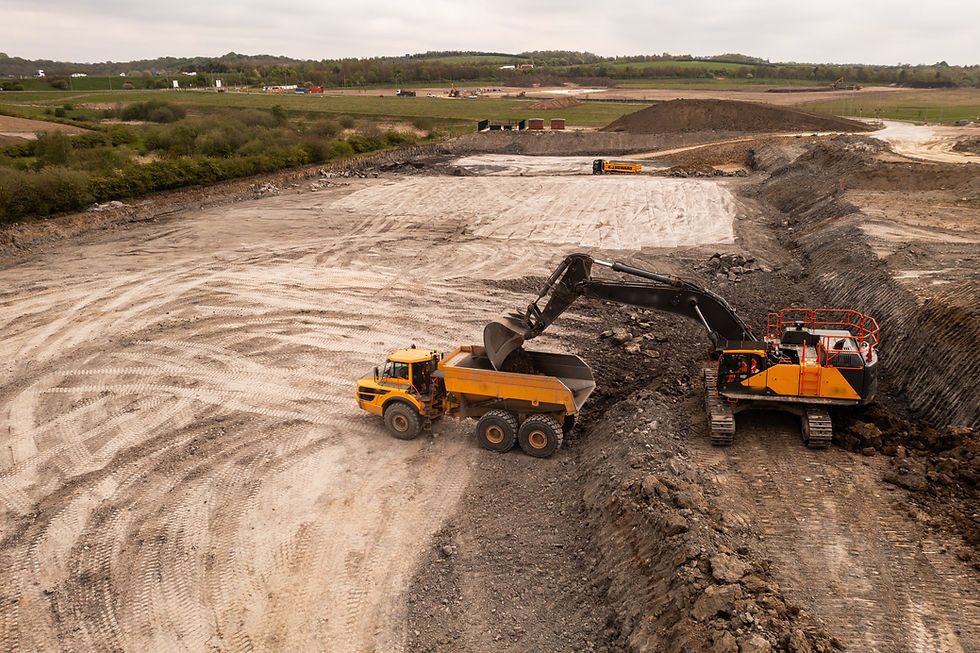
The new 20,000-home and retail development in East London is exactly the kind of project the market has been pushing for:
large, well-planned, and built on unused land.
In practice, the issues are consistent across these developments. Contaminated land
remediation works may have been completed, but there is no formal sign-off or validation report available. Planning or building regulation conditions might not have been clearly discharged.
There may be historic contamination concerns where reports exist, but the final position is not fully evidenced.
It is not unusual for mineral rights to have been retained or separated from the surface title, particularly on land with an industrial past. In some cases, there may be rights to extract, or simply uncertainty over whether those rights could be exercised. Even where the practical risk is low, the lack of clarity can be enough to raise lender concerns.
Closely linked to this is use. Historic use does not always align neatly with current residential development, and solicitors will often come across restrictive covenants or old rights that appear to limit how the land can be used.
On a single plot, these can often be dealt with pragmatically. On a large development, the same issue can crop up repeatedly across multiple plots, sometimes in slightly different forms.
Legal indemnity insurance will not fill in missing documents, confirm that works were carried out correctly, guarantee that there will be no injunction, or that compensation won't have to be paid. What it can do is allow a transaction to proceed where the risk for the owner is understood, low, and unlikely to lead to enforcement, but cannot be fully resolved before completion.
From a solicitor’s point of view, it is about judgement. Knowing when something is a real issue, and when it is a technical gap that just needs a practical solution. From an underwriting perspective, it is about examining the broader development, not just the individual plot, and understanding how and why the issue has arisen.
With housing demand showing no signs of easing, brownfield development is only set to increase. The details will vary from site to site, but the underlying theme remains the same: new homes, built on old land, with a paper trail that does not always tell the full story.
